Jordan Places to Visit
Wadi Shuieb

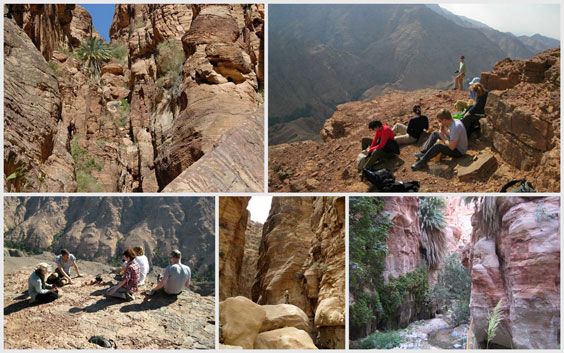
The Wadi Shuieb, an eastern side wadi of the Jordan Valley near the capital Amman with elevations ranging from -200 meters below sea level in the southwest up to 1240 below sea level in the northeast. 

The area belongs to the Balqa Governorate and comprises 5 distinct municipalities (As-Salt, Fuheis, Mahis) and several small hamlets with a total population of approximately 108.000 people. The population density, as well as most agricultural activity is concentrated in the higher altitudes in the northern part of the Wadi. 

In 1968, a dam was constructed in Wadi Shuieb in order to catch the water from the seasonal rain and from several springs in the area. As a result, there is a permanent flow of water and in the spring, a profusion of wild flowers blanket the landscape, which in turn makes this wadi and excellent location for bird watching.

Recent discovers in the wadi have also unearthed bronze bracelets and coins ranging from the Hellenistic to the Ayyubid period.

Wadi Rum

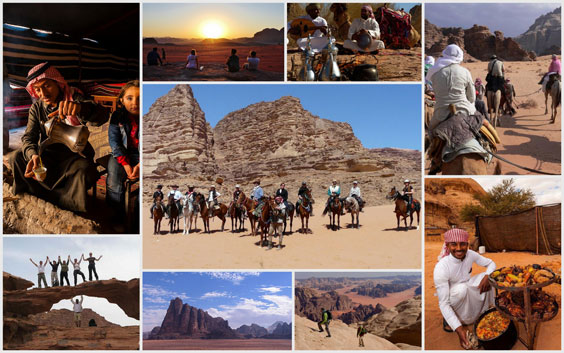
Wadi Rum is accessed from a tarmac road off the main Desert Highway, an hour’s drive from Aqaba. Along the way are fields of watermelon for as long as the eye can see but after crossing the railway line, the scene begins to change dramatically. Also known as “The Valley of the Moon”, it is the largest wadi in Jordan and the place where Prince Faisal Bin Hussein and T.E. Lawrence based their headquarters during the Arab Revolt against the Ottomans in World War 1. 

The Bedouins are the indigenous people of the desert and are renowned for their generosity. They are not wealthy people but their tradition of hospitality obliges them to take great care of their guests with all they have.

Despite its barren appearance, Wadi Rum is home to a complex ecosystem. Small medicinal plants dot the desert and are used to this day by the Bedouin, and during the infrequent rains parts of the desert bloom with over 200 species of flowers and wild grasses. For most of the year, the extreme heat and lack of ground water mean that animals only venture out at night. If you sit tight, you may well see a hedgehog, hare or hyrax (a small furry animal implausibly related to the elephant). If you’re extremely lucky, you could catch a glimpse of a jackal, wolf, caracal or giant-horned ibex. Dusk and dawn are the most magical times to view the desert and the best vantage point differ according to the time of year. 

Seven Pillars of Wisdom
Named in honor of Lawrence’s book, this large rock formation, with seven fluted turrets, is easy to see from the road. 

Jebel Umm Ishrin
The Seven Piilars rock is connected to the deeply crevassed “Mother of Twenty”, a 20-domed mountain forming the east flank of Wadi Rum. The mountain acquired its name, according to local legend, after a woman killed 19 suitors; she was outwitted by the 20th, so she married him. The whole range turns a magnificent white-capped auburn during sunset.

Jebel Rum
The western flank of Wadi Rum is formed by Jebel Rum, which towers 1754 meters over Wadi Rum village. It is a popular destination for scramblers and climbers who tackle parts of the ancient Thamudic Way to the summit. Similar pathways once used for hunting ibex and collecting medicinal plants link one massif to another throughout the area giving limitless scope for hiking, scrambling and climbing.

Nabataean Temple
In Rum village are the ruins of a 2,000-year-old temple, dedicated to the deity Lat. The ruins are important because they are evidence of a temple built by the Arab tribe of Ad. The baths in a villa behind the temple are the earliest so far discovered in Jordan. Near the temple are some inscriptions by hunters and nomads dating back to 2nd century BC.

Lawrence’s Spring
Together with other springs in the area, this natural waterspout tumbles into a leafy paradise just five feet square. It was an important watering hole for caravans traveling betweenSyria and Arabia.

Other notable sites are Al-Hasany Dunes, Little Rock Bridge, Khazali Canyon, and Umm Fruth Rock Bridge.

Wadi Al- Mujib

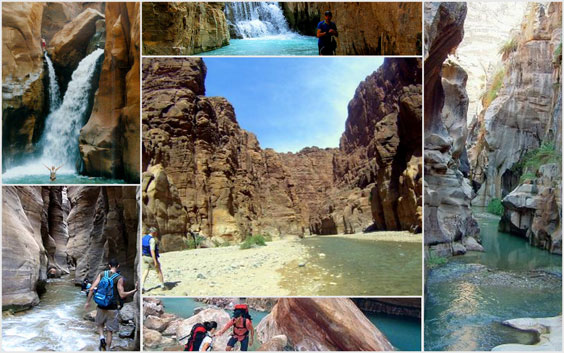
Adjacent to the Dead Sea, this amazing area ranges from 900m above sea level to 400m below, and was originally established by the Royal Society for the Conservation of Nature. It supports over 400 species of plants (including rare orchids), 186 species of birds and 250 animal species including the Syrian wolf, striped hyena, caracal, and fox. It’s also an important post for migratory birds traveling between Africa and Europe.

There are 4 main trails traversing the wadi all with varying degrees of difficulty: Siq Trail, Malaqi Trail, Ibex Trail, and Mujib trail.

Wadi Ghwair

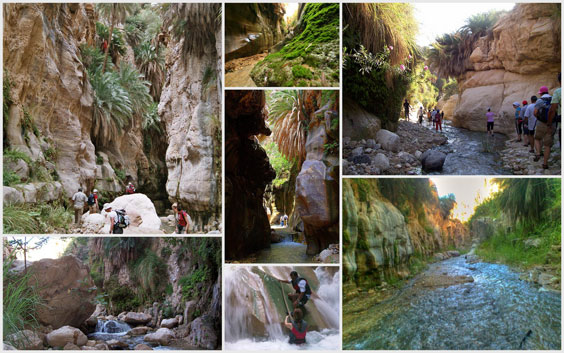
Although Wadi Ghwair is one of the smaller wadis, it is home to an amazing hanging garden. The sides of the canyon walls are covered with moist green moss and ferns, while high overhead palm trees, reeds and oleander shrubs hang down to form a natural curtain. The stream vanishes underneath gravel and small rocks along the way only reappear every now and then along the way.

Wadi bin Hammad

Hiking in the wadi is like hiking in a subtropical rain forest. Water seeps from every crevice while an abundance of plants and palm trees grows vicariously from the canyon walls displaying all different hues of green. The dripping water paints the underlying rock surfaces various shades of red while crystal-type stalactites dangle from above. Around every corner, there is another breathtaking view to be discovered.

Wadi Al Hasa

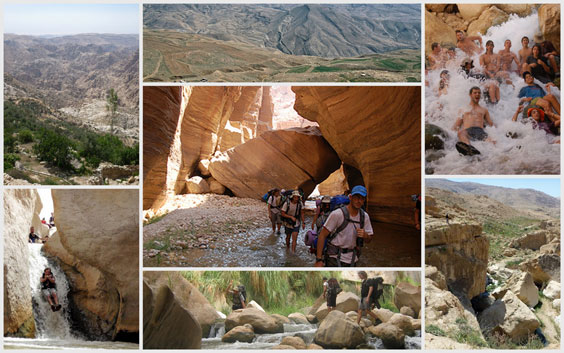
Wadi Al Hasa is the longest and the most beautiful wadis in Jordan and considered to be Jordan’s natural water park. Hidden deep inside, shallow streams babble over rocks that soon become foaming rapids where the water can, within a matter of minutes, become shoulder depth. Swim, wade, climb, jump and scramble to steaming pools of paradise.

Umm Qais

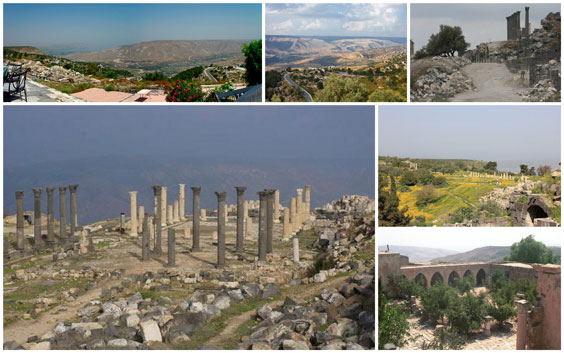
Site of the famous miracle of the Gadarene swine, Umm Qais, in earlier times know as Gadara, was renowned in its time as a cultural centre. It was the home of several classical poets and philosophers, including Theodorus, founder of a rhetorical school in Rome.

Perched on a splendid hilltop overlooking the Jordan Valley and the Sea of Galilee (Lake Tiberias), Gadara is today known as Umm Qais and boasts impressive colonnade streets, vaulted terrace and the ruins of two theatres. After taking in the sites, dine on the terrace of a fine restaurant with a breathtaking view of three countries.

This ancient city is also under review to be added to the UNESCO World Heritage list.

Umm Al Rasas

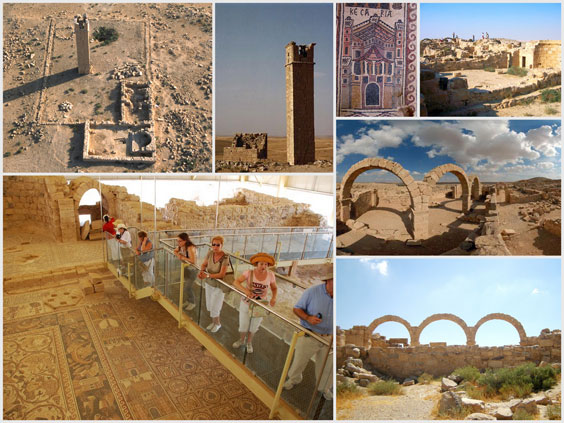
Most of this archaeological site, which started as a Roman military camp and grew to become a town from the 5th century, has not been excavated. It contains remains from the Roman, Byzantine and Early Muslim periods (end of 3rd to 9th centuries AD) and a fortified Roman military camp. The site also has 16 churches, some with well-preserved mosaic floors. Particularly noteworthy is the mosaic floor of the Church of Saint Stephen with its representation of towns in the region.

Shoumari Reserve

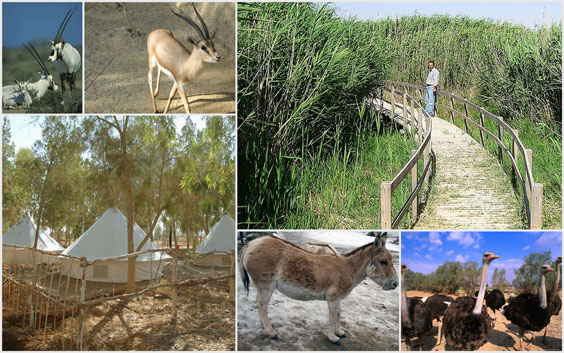
Jordan’s first wildlife reserve established in 1975 by the Royal Society for the Conservation of Nature, Shoumari is home to more than 193 species of flora, six species of carnivores (red fox, jackal, wolf, hyena, caracal, and wild cat) while bird sightings in the reserve include the Imperial Eagle, Pallid Harrier, and Egyptian Vulture. The reserve also is a breeding center for globally threatened and locally extinct wildlife such as the oryx, onagers (wild donkey), ostriches and gazelles. An observation tower provides a perfect lookout for spotting the reserve’s wildlife.

Shouback

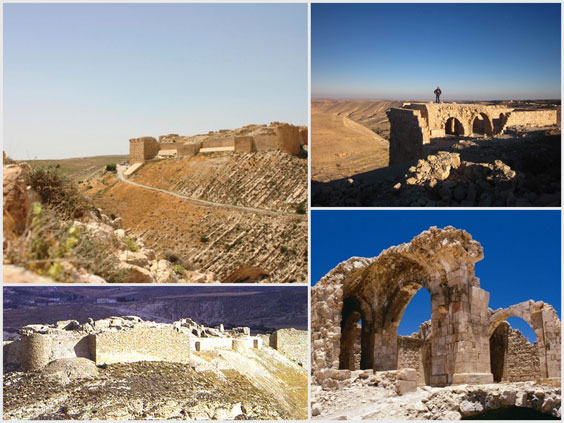
Shouback is the location of yet another famous Crusader castle. Constructed in 1115AD, by Baldwin I, the castle is perched on top a small hill. Within the fortress, lies great insight into how the day-to-day living must have been during this time. There are ruins of two churches, cisterns and rainwater pipes, in addition to millstones for pressing olives. A set of stairs cut into the rock tunnels down 375 steps to a spring below the castle.

Shouback is also under review to be added to the UNESCO World Heritage list.

Pages

Contact us

Contact us to learn more about our services and find out exactly how we can create a customized tour for your touring style and needs.

CAPTCHA
This question is for testing whether or not you are a human visitor and to prevent automated spam submissions.