Jordan Places to Visit
Petra

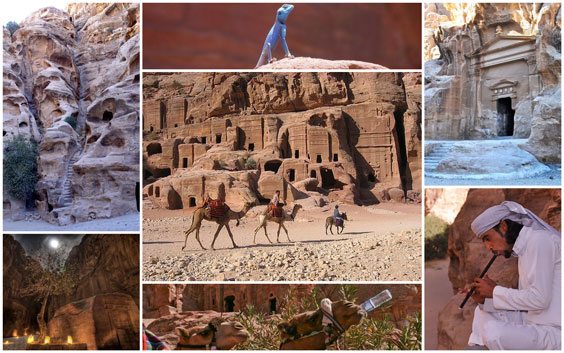
This “Rose Red City” is perhaps the most spectacular ancient city remaining in the modern world – so much so that it is a UNESCO World Heritage Site and also listed in the Smithsonian Magazine as one of the “28 Place to See Before You Die”. Words cannot justly describe the site and feel 

The Nabataeans established this great engineering marvel and made it their capital more than 2,000 years ago due to the area's natural fortification. 30,000 people lived hidden among the canyons, which was admired for its massive architecture and refined culture. They diverted all the trade routes so that Petra was at the centre of all the important civilizations in the ancient world. 

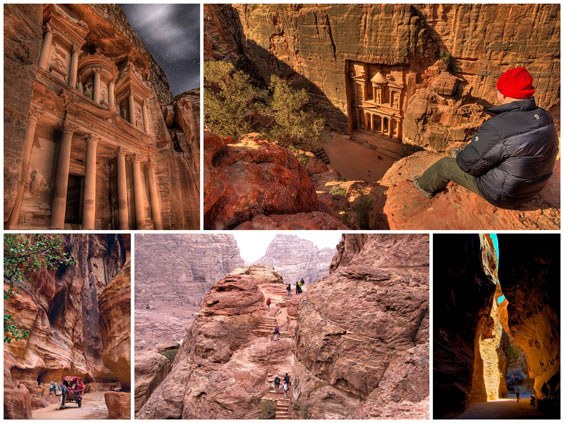
A tour of Petra starts either by walking or riding on horseback, but only as far as the entrance of the canyon Siq. The 'Siq' is one mile long, and the ancient road meanders around many bends and turns along on the way. Then suddenly - a magnificent view of one the most impressive facades in the world - the Treasury. 

After the Treasury, each corner brings a new surprise. The ancient road leads to the Royal section, which includes houses and tombs for the Royal Family, the Theatre, the shops, the Court of Justice, the Corinthian Palace, Silk Palace, the Palace Tomb, the Nymphium, a Roman colonnaded street, the Arched Gate, and the Daughter's Palace.

Start climbing to see the highlights of Petra: the Monastery, the High Place of Sacrifice, Mother of Cisterns, Khubtha Mountain and Al Madras. Visitors can hike for the whole day to visit Aaron Mountain, the place where Moses presumably buried his brother Aaron, to the Snake Monument, Sabra, and many others. In other words, one may spend more than a day wandering amongst the wonders of the city.
Pella

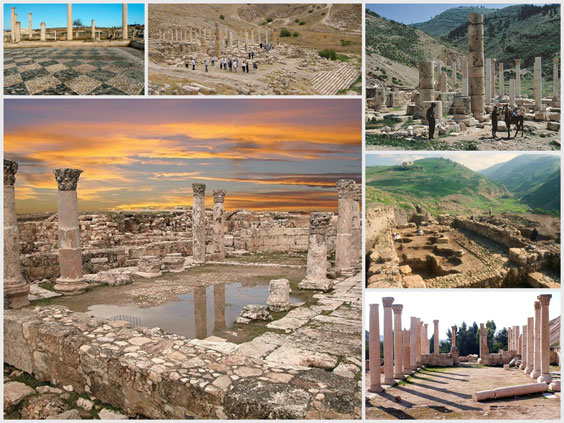
In the middle of the Jordan Valley are the ruins of the ancient city of Pella. Because it has been continually inhabited since the Stone Age, it is considered one of the richest and largest archeological sites in Jordan and is also under review to be added to the UNESCO World Heritage list. 

Pella was inhabited a million years ago by hunters and gathers who followed herds of game animals through the Stone Age forests. By 5000 BC, permanent Neolithic farming villages sprung up and attracted the attention of the Egyptians, who referred to the site in written texts in the 2nd millennium BC. Pella thrived due to its strategic position on the trade routes running between Arabia, Syria, Egypt and the Mediterranean. Luxury items, including ivory sculpture and gold jewelry have been excavated from the site, suggesting that Pella was a prosperous settlement throughout the Bronze and Iron Ages.

Under Greek rule, the settlement earned the name Pella, after the birthplace of Alexander the Great, but the Jews largely destroyed Pella in 83 BC as its inhabitants were not included to adopt Jewish customs. 

Approximately twenty years later, the Romans entered the area and rebuilt the city. In 451 AD during the Byzantine era, Pella reached its peak where the population has been estimated to had been as high as 25,000 and it enjoyed an era of political and economical stability. The city was virtually destroyed by an earthquake that shook the region in 747 AD. 

The last occupiers of Pella were the Mamluks during the 13th and 15 centuries and it enjoyed a brief recovery until the invasion of the Ottomans caused the residents to flee. This ended the 6,000 years of continuous settlement.

Today there is an opportunity to see the remains of Chalcolithic settlement from the 4th millennium BC, evidence of Bronze and Iron-age walled cities, Byzantine churches, early Islamic residence and a small medieval mosque

Namaleh

Linking Little Petra (also known as Al Beidha) to and Wadi Araba, this little-known road is filled with rocky canyons, dramatic vistas perched atop cliff-side lookouts, Nabatean carvings and exciting twists that hang precariously near the rugged cliff edges. 

Commonly used by the Bedouins of Wadi Araba to reach relatives and friends in Wadi Musa and Petra, this drive is accessible from Little Petra (8.4 km north of Petra) or the village of Qurayqura (pronounced greigra), located off of the Dead Sea Aqaba Highway near Feynan Ecolodge. Wadi Namla is not for the faint-hearted and should not be driven after dark.

The scenery gradually shifts from desert sand to orange, brown and even green, with jagged rocks that cling to steep mountains.  Upon reaching the peak, you will see a fenced-in area protecting the remnants of an ancient settlement, thousands of years old.  Shortly after, you can spot gently rolling hills that support green farms.  Herds of goats often cross here and camels can be seen dozing or grazing on the side of the road.

Mukawir

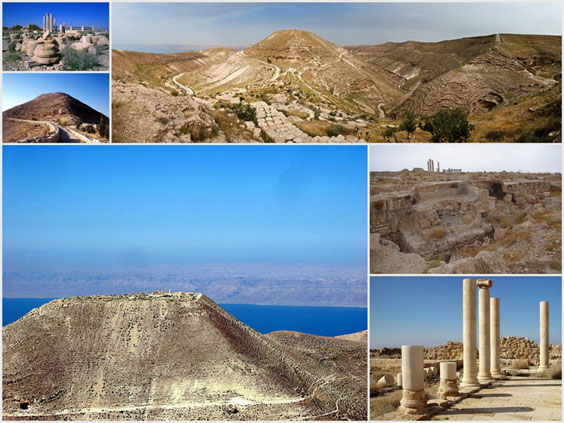
Within an hour’s drive from Madaba along the picturesque Kings’ Highway, is Mukawir, the hilltop stronghold of Herod the Great. Upon Herod’s death, his son Herod Antipas inherited the fortress and it is from here that he ordered John the Baptist to be beheaded after Salome’s fateful dance of the seven veils.

Mt.Nebo

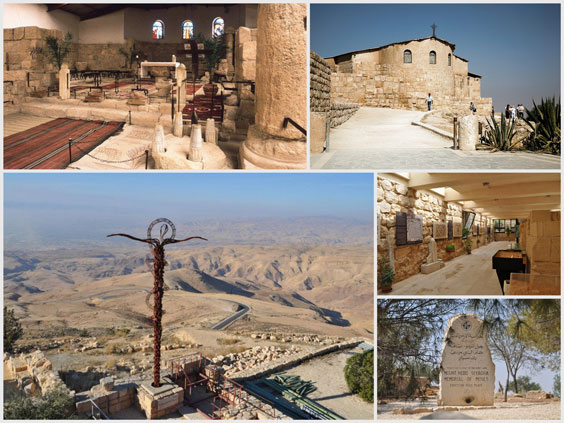
Here you will find the memorial of Moses, and the place from which he viewed the Promised Land. Think back to the time when Moses marched with his staff of the Israelites, all the way north from Egypt to Mount Nebo. On top of the mountain, a Christian church was built between the 4th and 6th century A.D. which is considered to be the most valuable church in the whole region, due to the fact it contains beautifully constructed mosaic walls and a superb mosaic floor. On a clear day from the top of the mountain, you can see Jerusalem, Jericho, and the Dead Sea

Madaba

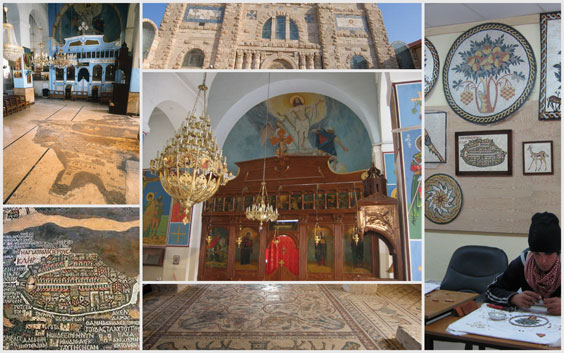
Travel along the 5,000 year old King’s Highway to Madaba better known as the “City of Mosaics”. Hundreds of mosaics from the 5th through the 7th century are scattered throughout the city. Most notable are the Church of St. George and Church of the
Apostles.

Church of St. George
Imagine the excitement, when builders came across this old church in 1884. Adorning the floor was an amazing mosaic representing the oldest map of Palestine in existence along with all the major historical sites from Egypt to Palestine. Crafted in 560AD, this original masterpiece once contained more than two million brightly colored pieces. 

Church of the Apostles
This small church contains one of Madaba’s most beautiful mosaics dedicated to the Twelve Apostles. The mosaic is known as "Personification of the Sea" and it vividly depicts a woman emerging from the sea, surrounded by mythical aquatic creatures and a hodgepodge of rams, bulls, parrots and exotic vegetation.

Madaba Museum
For a true taste of culture, a visit to this museum should not be missed. Not only does it display a collection of mosaic collages, but the museum is actually setup inside an ancient chapel which is adorn with its own mosaic masterpieces. The museum also displays traditional embroidered Jordanian dresses, jewelry and pottery dating back to various ages.

Ma'in

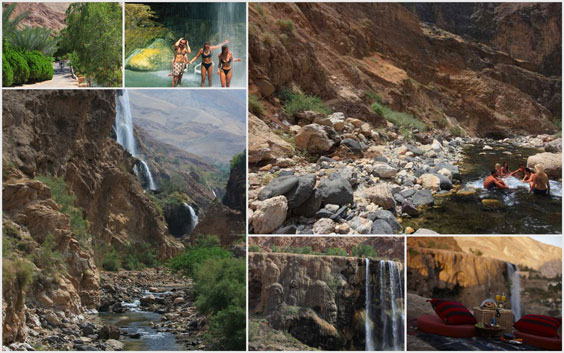
The hot springs here have been enjoyed for therapeutic and leisure purposes for thousands of years. Popular with both locals and tourists alike, the springs are located 264 meters below sea level in one of the most breath-taking desert oasis’s in the world. Thousands of visiting bathers come each year to enjoy the mineral rich waters of these hyper-thermal waterfalls.

Little Petra

In the eighth millennium BC, pre-historic man settled in “Baydah” (Baydah means “the white one” and was the name given by the locals due to the white-colored rocks), and the remains of this ancient Neolithic site is one of the earliest co-operative villages on earth. 

When the Nabataeans settled into the area, they established the area as an important caravan station and as a preliminary site for the ancient traders in preparation for the grand sales in the main part of Petra. Triclinums (big halls with three inner benches) were carved amongst the rocks of the Siq to provide accommodation for the traders. Water was also abundant due to careful “harvesting”.

As the style of architecture is similar to Petra itself, but much smaller, it is now known as Little Petra, a modern name given by archaeologists.

Kerak

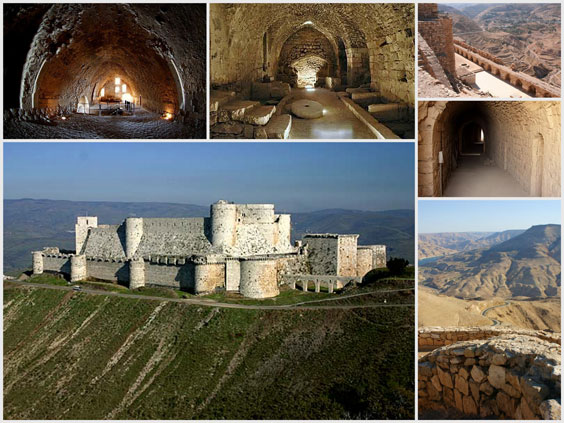
Kerak has been a prized possession of a number of civilizations. It lies on the ancient caravan routes that used to connect Egypt and Syria, and its commanding position almost 1000 meters above the Dead Sea Valley made it a great strategic asset. Kerak is home to one of Jordan’s greatest highlights – the imposing Crusader castle. Built in 1142, the castle provides an interesting insight into the struggles for the Holy Land between the Crusaders and the Muslims. 

Some claim when the wind blows in a certain direction, they can hear a wailing moan. Rumor has it that these are the ghosts of the victims of Renauld de Chatillon, a French crusader who inherited the castle soon after it was built. Here he imprisoned his enemies and later would have them hurled off the castle walls into the rocky wadi, 450M below. 

The best-preserved areas of the castles are located underground and can only be reached through a massive door. As many of the halls and passageways are unlit, it is wise to bring a flashlight.

Jerash

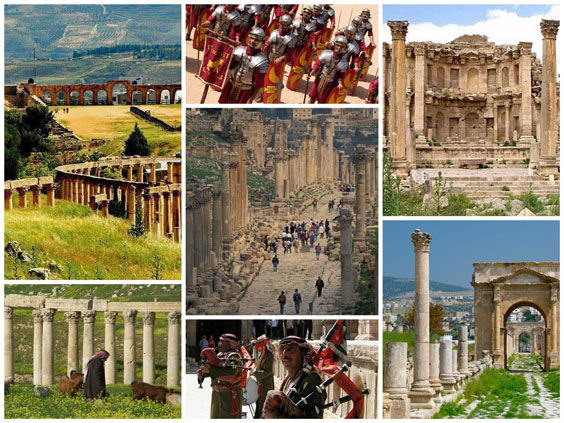
This is one of the best-preserved Roman cities in the world and during Alexander the Great’s reign, it had a population of 15,000 – 20,000. With all its gates still standing, along with the paved streets, colonnades, walls, theatres, forums, temples, and churches, one can feel the spirit of the past and almost hear echoes of a time long ago. Watch history come to life while gladiators and charioteers from the Roman Army and Chariot Experience perform before the crowd in the massive arena known as the Hippodrome.
Although it was not on a major trade route, the ancient city was of great wealth and importance because of its fertile soil. Even today, the area is rich with an abundance of groves and orchards. Figs, apples, plums, berries and olives all grow in the surrounding hillsides. 

Jerash also celebrates a 14-day festival of culture and the arts during July and August each year in which many internationally known artists are invited to participate in array of plays, poetry readings, opera and musical concerts.

This ancient Roman city is also under review to be added to the UNESCO World Heritage list.

Pages

Contact us

Contact us to learn more about our services and find out exactly how we can create a customized tour for your touring style and needs.

CAPTCHA
This question is for testing whether or not you are a human visitor and to prevent automated spam submissions.