Jordan Places to Visit
Amman

Also known as “The City of Brotherly Love”, Amman is one of the oldest continuously inhabited cities in the world. This capital city is a blend of both modern and traditional cultures and one doesn’t have to look far to experience the best of both worlds. 

Royal Automobile Museum
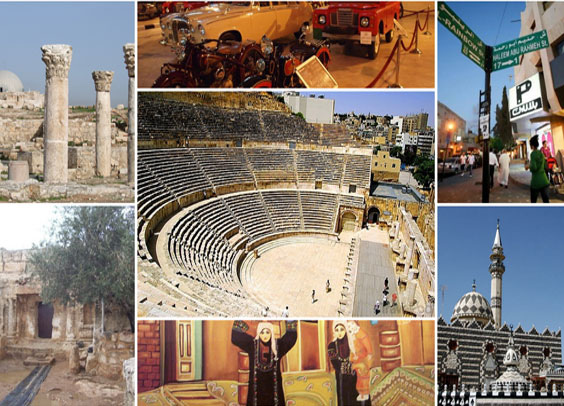
The Royal Automobile Museum is a car lover's delight.  Around every corner lies an expensive car even more fabulous than the one before. The late King Hussein was an avid car enthusiast. In commemoration to the late King Hussein, his son, King Abdullah II, commemorated the museum in his father's honor. Many of the cars are placed in settings that recreate the era or the situation in which it was used.

The Citadel
Towering above downtown Amman, the ancient Citadel is a good place to begin a tour of the archaeological sites of the city. It is the site of ancient Rabbath-Ammon and excavations there have revealed numerous Roman, Byzantine and early Islamic remains.

Roman Amphitheater
An imposing monument set into the side of the mountain. Its 33 rows of seats can accommodate almost 6000 spectators. The theatre, which dates back to approximately the mid 2nd century AD, comes back to life with musical and dance performances held regularly under the moonlit summer skies.

Ahl Al Kahf (Cave of the 7 Sleepers)
Also known as Cave of the 7 Sleepers or Sleepers of the Cave, this story was described by Bishop Stephen of Ephesus around 448 AD. and also appears in the Qur’an. The “Seven Sleepers” were seven young soldiers who around 250 AD took refuge in the cave to protect themselves from performing pagan sacrifices. The cave was then sealed and they fell into a miraculous sleep. Sometime between 408-450 AD, the cave was reopened and the sleepers awoke. Later, upon their passing, they were richly enshrined. Today, the sealed tombs can be seen along with the remains to two mosques and a large Byzantine cemetery.

Rainbow Street
In 2006, the Rainbow Street area was transformed into a heritage attraction by the Greater Amman Municipality. Located in Jabal Amman, the cozy and diverse atmosphere offers modern enjoyable hangouts, wonderful views and an old town feel.

Jordan National Gallery of Fine Arts
The gallery, one of the major art museums in the Middle East is a gem full of modern art representing the Middle East and Asia.

Abu Darwish Mosque
This distinctive black and white mosque built in 1961 and commissioned by the late King Hussein of Jordan and Mustafa Jakazi is at the top of Jebel Al-Ashrafiyeh. It is located on a plaza that has some seating areas to relax. You can see wonderful views across Amman from here. The main mosque area inside is only used for the Friday Juma prayer and other day's prayers are conduct in the area that was originally designed as the wudu washing area, so do not expect a visit inside, but the exterior is amazing.
Hammamat Afra

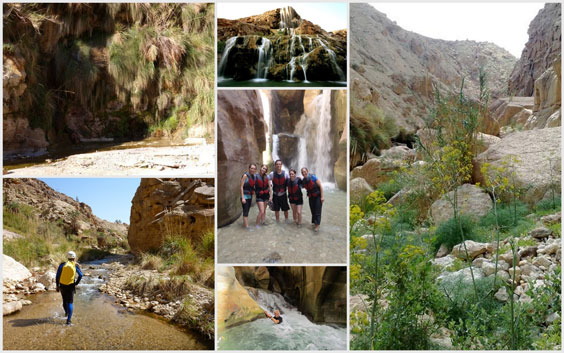
About 26 kilometers north of Tafila, are the thermal hot springs Hammamat Afra. It contains one of the richest sources of hot springs water in the region. Fifteen springs emerge from the ground to fill the air with beneficial minerals as well as the therapeutic use of the water itself on the body. The area is also filled with cascading waterfalls and natural water slides each emptying into soothing, therapeutic pools formed naturally by the water.

Feynan

Feynan is an isolated rural community in Wadi Araba and is best known for its world-class eco-lodge. It is build entirely of local materials and reflects a unique arabesque design. The local architect incorporated traditional adobe building techniques and produced a functional, romantic atmosphere that blends in with its surroundings. It’s powered by day using solar energy and lit at night be candles produced by the local Bedouin women. It is run and staffed entirely by the local people.

Desert Castles

Qasr A-Kharrana
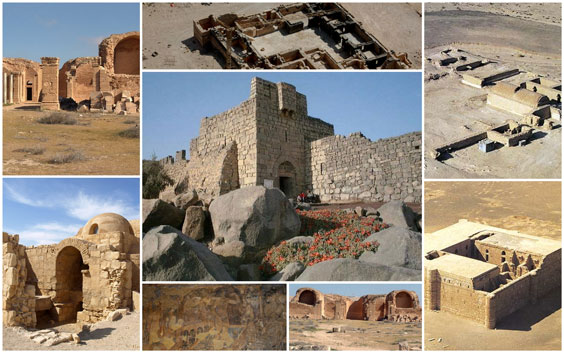
At first sight the construction appears to be a fortified castle, but in fact it was a palace used as a caravan station, built in 710 -715 AD during the reign of Al Waleed bin Abdelmalik. The palace consisted of two stories; they used the lower one as stables for horses, camels and other animals, while the upper storey contained housing units for the traders. The total number of all the rooms in both stories was 61: the lower had 25 and the upper 36. 

Qasr al-Amra
Amra is one of the best-preserved castles and a UNESCO World Heritage Site. It was built by the Umayyad’s in the eastern Jordanian desert, as a place for hunting and relaxation for the caliphs. Its interior walls and ceilings are covered with lively frescoes, and two of the rooms are paved with colorful mosaics.

Qasr al-Azraq
This castle is one of the biggest desert castles and constructed out of black basalt. In some books it is known as the "Blue Castle" because of the dark blue colors and flashes that come from the basaltic stone. Because of its strategic location close to the borders of several countries and near a water supply, the site has been occupied by many different civilizations, including the Umayyads, Ayyubids and Ottomans. It was made famous during World War I, when T. E. Lawrence, better known as Lawrence of Arabia, used the castle as his military base during the Arab Revolt against the Turks. 

Qasr Al-Mushatta
Visually striking because of the orange colored fired bricks used in its construction, this castle had a strategic location on the trade routes from the east to the west of Jordan. It is under review to be added to the UNESCO World Heritage List.

Qasr A-Tuba 
Started during the time of Walid the second (744 AD), it was designed as a place where travellers along the caravan route could rest from the day’s journey. It was built of large square, fired bricks, placed on stone foundations, and the very thick walls make this palace one of the outstanding palaces in the region.

Qasr Al-Hallabat 
Built by the Romans between 198-217 AD, this castle was originally used as a defense against raiding desert tribes. Hallabat once boasted elaborate baths, intricate frescoes and mosaics, a mosque and several reservoirs. With a fair proportion of masonry still standing, and some beautifully restored archways, this fort is an excellent example of the desert castles of the region.

Dead Sea

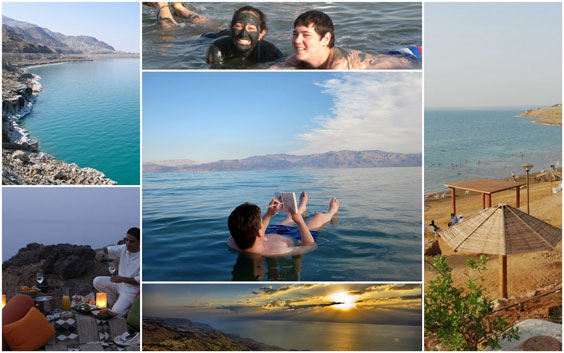
The Dead Sea is most famous for being “the lowest point on earth”. Lying some 400 meters below sea level, it is 75 kilometers long and from 6 to 16 kilometers wide. It is fed by the Jordan River, but it has no outlet, and due to the high evaporation rate, the water holds a tremendous amount of salt (33%) – so much that swimmers float on the surface without even trying. This natural spa wonder has fascinated people for thousands of years, and today people from all over the world come to enjoy its soothing therapeutic and medicinal properties.

The Dead Sea Panoramic Complex/Dead Sea Museum located on a steep cliff high above the Dead Sea. The museum is run by the Royal Society for the Conservation of Nature and has some fascinating information about the geology, ecology, archaeology, history and industry of the Dead Sea. Watching the sunset from here is a wonderful experience.

Dana Reserve

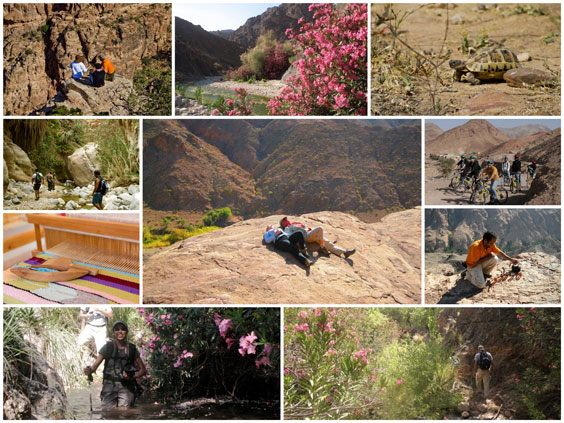
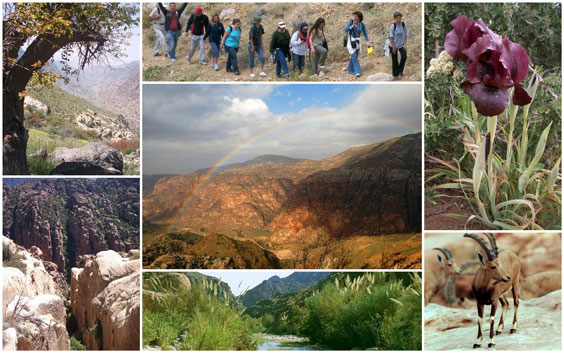
This hidden gem is an eco-tourist’s dream and also a destination for adventurers, history buffs, archaeologists, hikers, and nature lovers. It is the largest reserve in Jordan and includes a variety of unique terrain ranging from sandstone cliffs over 1700m high to a low point of 50m below sea level and contains four eco-systems (Mediterranean, Irano-Turanian, Saharo Arabian, and Sudanian penetration). For this reason, Dana now has achieved official ‘biodiversity reserve’ status and is under review to be added to the UNESCO World Heritage List.

There are approximately 600 species of plants ranging from citrus trees and juniper, to desert acacias and date palms. Over 180 species of birds and over 45 species of mammals also inhabit the reserve including the caracal ibex, mountain gazelle, sand cat, red fox and wolf. Nearly 100 archaeological sites have been discovered in the reserve. Of most interest are the ruins of Khirbet Feinan, at the mouth of Wadi Feinan and Wadi Ghuweir. The copper mines here date back 6000 years, when they were the largest metal smelting operations in the Near East. Over eight major hiking, trekking and canyoning trails are available ranging from easy, moderate, to hard and for cycling enthusiasts, a mountain-biking trail.

Before leaving the area, it is worthwhile to stop by the nearby village where quality, Bedouin-made items are available - from organic herbs, fruit rolls, jams, and olive oil to soaps candles, leather goods, candles and silver jewelry.

Bethany

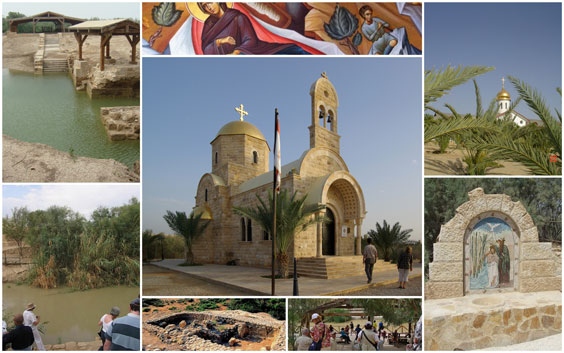
Also known as Bethany-beyond-the-Jordan, this archaeological site is one of the most important biblical discoveries in the world. Excavations began in 1996 and has already uncovered more than 20 churches, caves and baptismal pools dating from the Roman and Byzantine periods. 

Archaeologists are assured this is where John the Baptist lived, Jesus was baptized, and the first five apostles met. Many also believe this was the place where the Prophet Elijah ascended to heaven. The path leading to the Jordan River transform from a dry desert into a tropical oasis and it becomes clear why Prophet Jeremiah described it as "the jungle of the Jordan".

Bethany is also under review to be added to the UNESCO World Heritage list.

Azraq Reserve

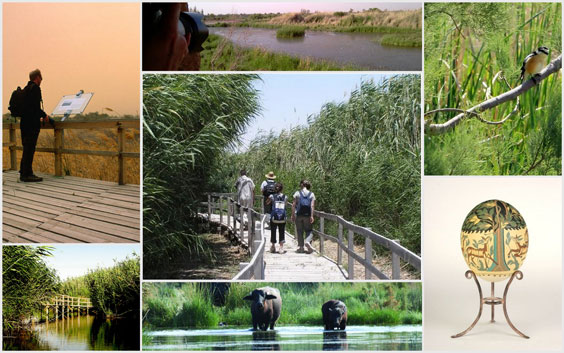
Established in 1988 by the Royal Society for the Conservation of Nature, this wetland reserve is expected to be added to the UNESCO list. It is located in the eastern desert and is a magnet for migratory birds. From December through March, large flocks of birds, such as Temmiink's Horned Lark, Desert Lark, Hoopoe Lark, Desert Wheatear and Trumpeter Finch, Cranes, and Imperial Eagles, make their way from Europe to Africa. Leisurely hike the Marsh Trail, a 1.5KM pathway meandering though the towering reeds. Along the way take time to stop at the mud-brick "rustic bird hide", overlooking one of the reserve's lagoons and stop at Shishan springs where a handy platform extends out over the lagoon. Upon leaving the reserve, visit the local workshop where women from the local community produce finely painted ostrich eggs, silk-screened t-shirts, and range of other hand crafted items.

Ajloun

Ajloun is just a short journey from Jerash through pine forest and olive groves and boasts scores of ancient sites, including water mills, forts and villages, all in the beautiful hills and valleys of north Jordan.

Ajloun Castle
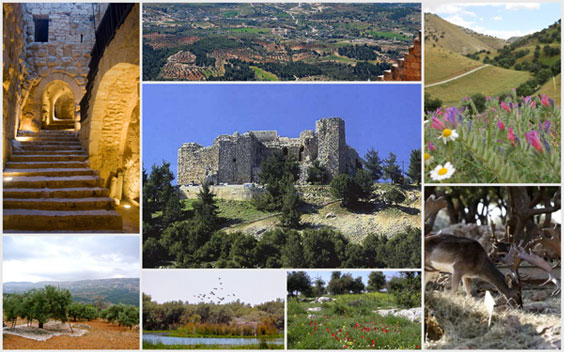
The castle was built by one of Saladin's generals in 1184 AD to control the iron mines of Ajloun. It was also used to defend the area from Crusader invasions. As part of a chain of forts, beacons were lit at night to pass signals from the Euphrates to as far as Cairo. The hill on which the castle sits, Jabal Auf, is a perfect location, offering bird’s-eye views over the surrounding countryside and over three major wadis leading to the Jordan Valley.

Ajloun Nature Reserve
The reserve was first established in 1988 by the Royal Society for the Conservation of Nature. It comprises 13 square kilometers of rolling Mediterranean woodlands filled with oak, pistachio, pine, carob, strawberry trees and olive groves. There are several hiking trails where on any given day there is an opportunity to catch a glimpse of its amazing array of wildlife: foxes, badgers, wild boar, striped hyena, and wild cats as well as impressive collection of bird species. There is also a special area for camping.

Aqaba

In the 10th century, a Muslim traveler described Aqaba as ‘a great city’ and a meeting place of pilgrims en route to and from Mecca. From as early as the 10th to 5th centuries BC, it was at the heart of ancient trade routes transporting copper ore, smelted from mines in Wadi Araba, and transported by King Solomon’s fleets to far-flung destinations. Ceramics from China and coins from Ethiopia highlight the cosmopolitan nature of the port throughout its early history. Thereafter the Egyptians, Nabataeans and Romans all found their uses for ‘Ayla’, as it came to be known, and the discovery of a late-3rd-century purpose- built church – one of the oldest in the world – is suggestive of a prosperous community, embracing of change.

Aqaba Castle
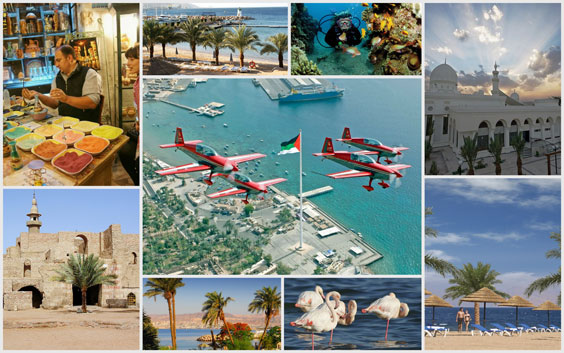
The castle was built between 1510 and 1517, as attested by the Arabic inscriptions inside the monumental gateway, and was used as a khan (travelers’ inn) for pilgrims on their way to Mecca. The Ottomans occupied the castle until WWI when, in 1917, the fortress was substantially destroyed by shelling from the British Royal Navy. The Hashemite coat of arms above the main entrance commemorates the Arab Revolt that swept through Aqaba, ousting the Turks. The fort is located next to the Aqaba Flagpole which carries the flag of the Arab revolt again the Ottomans

Aqaba Museum
The museum, part of the Aqaba Fort complex, was previously the home of the great-great-grandfather of the present king, Abdullah II. The collection of artifacts includes coins, ceramics and 8th-century Islamic stone tablets.

Aqaba Bird Observatory
The Aqaba city, with its unique location between the Sinai desert and the Middle East, has become an oasis where migrating birds rest during their long journey. The Jordanian Society for Sustainable Development (JSSD) decided in 2003 to establish lagoons for bird watching at the natural waste-water purification plant. The lagoons are magnificent sites that attract many birdwatchers from around the world especially during periods of migration. There are more than 150 types of bird in these lagoons in addition to 90 migrating species. They include little grebe, the gray heron, the squacco heron, black stork and the white stork.

Green Creations
Green Creations started in December of 2009 as a World Associates project. The purpose of GC is to train individuals to use recycled materials to create green income generating products: beads, jewelry, bags, bowls, purses, baskets and more.

Noor Al-Hussein Foundation Shop
For a fine selection of handicrafts, it’s worth calling in on the Noor Al-Hussein Foundation shop, located in the Aqaba Fort complex, opposite the museum. Profits help support marginalized communities throughout Jordan. Items include silver jewelry from Wadi Musa, petroglyph designs from Wadi Rum, kilims, clothes, embroidery, basketware and ceramics.

Sharif Hussein Bin Ali Mosque 
This beautiful and majestic white mosque is located between the souk and the beach. The mosque is named after the great grandfather of King Abdullah II.

Pages

Contact us

Contact us to learn more about our services and find out exactly how we can create a customized tour for your touring style and needs.

CAPTCHA
This question is for testing whether or not you are a human visitor and to prevent automated spam submissions.